português
  English
 français
 Deutsch
 italiano
 español
 Nederlands
 Türkçe
 Tiếng việt
 Indonesia
 svenska
 norsk språk

A marketing manager approved a digital mockup for a corporate event. She ordered a batch of custom umbrellas in her brand’s signature color, Tiffany Blue. The delivered batch showed a dull plastic blue instead. The color mismatch wasted thousands of dollars and damaged brand credibility. This disaster is avoidable. A rigorous process combining Pantone standards and physical lab dips ensures accurate pantone matching. DYY LIMITED, with extensive expertise, guides you through this process. This article will demystify color matching. It explains why screens lie about color. It provides an actionable workflow to achieve a perfect color match on fabric. Every time.
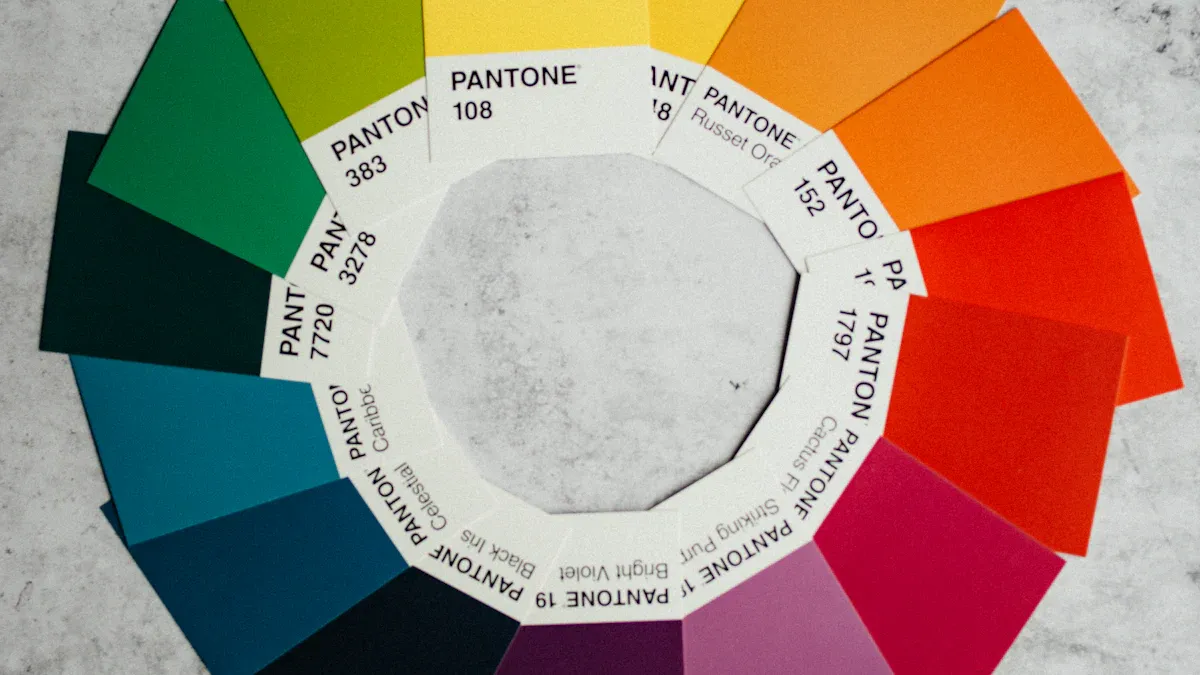
The root cause of most color disasters traces back to a fundamental physics difference. Screens emit light directly through an additive RGB model. Fabric absorbs light and reflects only specific wavelengths through a subtractive CMYK process. This distinction creates a wider gamut on screen, meaning vibrant neon greens or electric blues simply cannot exist as physical pigments on cloth.
|
Feature |
RGB |
CMYK |
|
Color model type |
Additive (light-based) |
Subtractive (ink-based) |
|
Core components |
Red, Green, Blue |
Cyan, Magenta, Yellow, Black |
|
Primary application |
Digital screens |
Textile printing |
|
Starting point |
Black (adds light) |
White fabric (adds ink) |
|
Color gamut |
Wider, more vibrant |
Narrower, more muted |
A digital design created in RGB must convert to CMYK before printing. Without proper conversion using ICC profiles specific to the printer and fabric, the printed result appears duller. Additionally, monitors require regular calibration. An uncalibrated screen displaying sRGB while the printer expects Adobe RGB produces unpredictable shade shifts. Environmental factors like temperature and humidity also alter ink viscosity and drying, causing uneven color distribution across the umbrella fabric.
Material choice dramatically influences dye absorption. Polyester absorbs only 0.4% water, while nylon absorbs 4.5%. This difference directly impacts how much dye each fiber accepts during aqueous dyeing processes. Polyester responds well to dye, making custom color creation straightforward. Nylon, with higher moisture uptake, can achieve deeper penetration but may produce slightly different final tones.
Polyester is highly responsive to dye, making it easy to create custom colors.
Fabric texture and weave affect light reflection, making the same dye appear lighter or darker. Coatings applied to the fabric can change how light interacts with the surface, altering the perceived color.
The eye-brain system exhibits color constancy, perceiving true color under varying illumination by comparing surrounding objects. However, this adaptation fails under inconsistent lighting conditions. A pantone reference viewed under warm indoor lighting appears different than under cool daylight. Professional manufacturers like DYY LIMITED evaluate lab dips under standardized D65 lighting to ensure accurate color matching. Their extensive experience provides the technical discipline necessary for consistent results across bulk production runs.
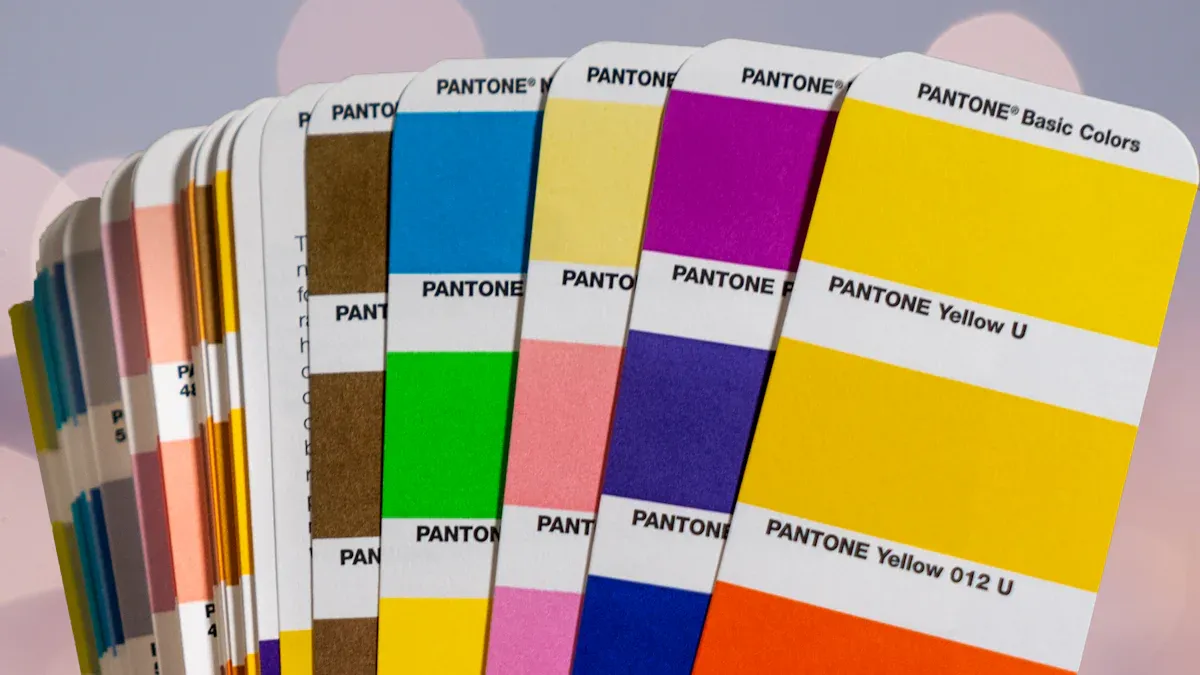
A lab dip represents a small piece of dyed fabric created specifically to match a Pantone code. This physical sample reveals the true color on the actual material. No digital simulation can replicate how dye interacts with polyester or nylon fibers. The lab dip approval process transforms abstract color theory into a tangible benchmark for production.
The approved swatch becomes the single reference point for bulk dyeing. Every subsequent production batch must align with this physical standard. Without it, manufacturers work from guesswork. The consequences of skipping this step prove severe. Color decisions occur only after bulk dyeing, leaving no room for adjustment. A single dye attempt offers no fallback option. Uncontrolled lighting conditions during inspection risk metamerism issues. Most critically, color mismatches surface only at final quality control or after delivery. Reprint costs, delayed shipments, and inconsistent batches follow.
The standard lab dip process follows a structured sequence. Buyers select the required Pantone color first. The dyeing mill then develops a small dyed fabric sample to match that reference. Submission to the buyer for review comes next. Buyers either approve the swatch or request shade corrections and resubmission. After approval, bulk fabric gets dyed according to the approved standard. Quality control verifies the bulk fabric matches before production continues.
|
Step |
Description |
|
1 |
Buyer selects the required Pantone color |
|
2 |
Dyeing mill develops a lab dip sample |
|
3 |
Sample submitted to buyer for review |
|
4 |
Buyer approves or requests corrections |
|
5 |
Bulk fabric dyed to approved standard |
|
6 |
Quality control verifies the match |
DYY LIMITED provides sample proofing within 5-7 days. Standard lab dip turnaround takes 5-7 days from receiving the pantone reference. The company typically presents three lab dip options (A/B/C) for selection. Up to two rounds of revision come built into the standard process. This structured color approval workflow prevents costly mistakes before mass production begins.
The benefits extend beyond simple verification. Lab dip approval catches issues like fabric absorbency differences or dye formula drift early. For Pantone-matched solids, the swatch confirms the dye mixture delivers the exact hue, saturation, and brightness requested. A disciplined review process cuts color complaints dramatically. One case study showed returns dropping from 10% to 2% after implementing rigorous lab dip protocols.
Lighting conditions dramatically alter color perception. Natural, incandescent, fluorescent, and LED lights each possess distinct spectral properties. Incandescent light enhances warm hues while distorting cool ones. Fluorescent light causes significant color shifts compared to daylight. Metamerism occurs when two fabric samples match under one light source but differ under another. Different spectral reflectance curves produce this phenomenon.
The textile industry adopted D65 as the global daylight standard. ISO 105, ASTM D1729, and CIE standards all recognize D65 for accurate color evaluation. D65 simulates average noonday light with a color rendering index close to 100. The correlated color temperature reaches approximately 6504 K. White point coordinates sit at xy ≈ 0.3127, 0.3290. Illuminance at the viewing plane should measure 1,500 ± 500 lux. A matte neutral grey surround with L* between 45-55 provides the proper background. Viewing geometry uses a 45°/0° or 0°/45° configuration with a 10° observer field.
|
Parameter |
D65 Specification |
|
Definition |
CIE standard daylight illuminant |
|
Color Temperature |
~6504 K |
|
Illuminance |
1,500 ± 500 lux |
|
Background |
Matte neutral grey (L* ≈ 45-55) |
|
Viewing Geometry |
45°/0° or 0°/45° |
DYY LIMITED evaluates all test batch dye samples under controlled D65 lighting. Their extensive experience and quality systems ensure consistent evaluation protocols. This expertise guarantees the color approval process delivers reliable results for every custom umbrella project.
Extensive manufacturing experience and quality management systems form the foundation of DYY LIMITED's color matching reliability. The certification proves the factory invests in quality systems. Without it, promises often collapse under real orders.
A robust quality management system is essential for consistent production results.
This discipline applies to every custom umbrella project, regardless of order size. Color inconsistency on a single batch can cost thousands in rework and damaged brand reputation. DYY LIMITED prevents this outcome through a systematic approach.
The extensive color fabric library accelerates pantone color matching significantly. Each physical swatch in the collection pairs with a standardized Pantone system for textile color coordination. The system assigns each color a unique identifier, bringing precision to textile manufacturing.
Pantone color systems provide a standardized reference for color matching in textile manufacturing.
The library overcomes a key source of mismatch: fabric absorbs ink differently than paper. Standardized formulas account for this absorption difference. When a client submits a pantone reference for a custom-color order, the team identifies the closest existing formula and adjusts it for the target shade. This approach reduces the number of lab dip rounds needed to achieve approval. The library supports evaluation of lab dip options against the actual umbrella fabric, reducing the risk of mismatch.
The color approval workflow follows a structured sequence from file submission to final quality control. The process contains six stages:
File Intake: The client submits a vector AI or PDF file, or a high-resolution raster image in CMYK format with pantone codes. Prepress checks verify resolution and color conversion.
Canopy Mapping: Artwork maps onto a canopy template. The team accounts for fabric tension and pre-distorts the design to avoid geometric distortion after assembly.
Digital Printing: Digital printing handles smooth gradients and photographic quality better than screen printing, preserving brand integrity.
Sublimation Sequence: Print artwork in reverse onto transfer media. Heat-press at a high temperature converts solid dye into gas that bonds permanently with polyester fibers.
Panel Alignment and Sewing: Laser-guided cutting with registration marks ensures perfect seam alignment.
Quality Control Gates: The team tests pantone match, seam continuity, abrasion resistance, water repellency, and wind resistance.
The color approval process includes specific verification methods:
Lab dip approval: A physical sample of dyed fabric must be approved before bulk production. This is the primary control point to lock in the color.
Lighting condition verification: The color must be checked under D65 standardized lighting, not just under factory lights.
Complete pantone code: The client must provide the full pantone reference to avoid mismatches between different color systems.
Material and coating check: The color must be evaluated on the final coated material, as coatings can alter the perceived shade.
Finished umbrella sample: For critical projects, a full umbrella sample confirms the overall visual result.
Agreed color tolerance: A commercially acceptable tolerance must be set before production to manage batch variation.
After file intake, DYY LIMITED creates lab dip options A, B, or C against the pantone reference. The client approves a swatch or requests corrections. Only after the approved swatch is confirmed does bulk fabric dyeing begin. During production, fabric color verification occurs under controlled D65 lighting. This ensures the shade matches the original reference regardless of ambient conditions.
The low MOQ per color and style makes this rigorous process accessible. Even small orders for custom umbrellas benefit from the same quality systems that handle large corporate contracts. The combination of the extensive color library, the structured workflow, and quality management systems means every client receives consistent attention to color accuracy.
A national retail chain needed a batch of custom umbrellas for a high-profile corporate gift campaign. The brand manager selected a vibrant Tiffany Blue from her computer screen. She approved the digital mockup without requesting a physical sample. The factory received the artwork file and proceeded directly to bulk production.
The delivered batch arrived weeks later. The umbrellas displayed a washed-out, greenish-blue tone. The vibrant shade from the screen simply did not exist on polyester fabric. The client rejected the entire shipment. The financial loss exceeded a significant amount, and the marketing campaign missed its launch window. The brand manager learned a costly lesson about pantone matching.
The client contacted DYY LIMITED for a rescue plan. Our color specialists introduced the Pantone TCX system. TCX stands for Textile Cotton eXtended. This physical color reference system dyes colors directly onto fabric. Each TCX card contains many industrially validated shades with documented dye recipes and spectral data. Cotton absorbs dye differently than paper or synthetics. TCX swatches reflect true absorption and depth on real textile fibers.
The team identified the correct TCX code for the desired Tiffany Blue. They then created three lab dip options on the actual umbrella fabric. Each option used a slightly different dye formula. The client evaluated these swatches under D65 standardized lighting in a color assessment cabinet. This lighting condition matches international QC inspection standards.
The acceptance criteria required a measured color difference of ΔE ≤ 1.5 via spectrophotometer. The client selected the closest option. This approved swatch became the shared physical benchmark for both parties. Bulk fabric dyeing proceeded only after this approval step.
The factory compared every production batch against the original pantone reference under the light booth. This verification caught dye lot variation before finished goods assembly. The final product matched the approved swatch perfectly. The client received their custom umbrellas with zero color complaints.
This case demonstrates why pantone matching requires physical verification. Digital proofs cannot replicate fabric texture, coating effects, or dye absorption. A custom-color order demands the discipline of physical color references and lab dip approval. DYY LIMITED's extensive experience and quality systems ensure this process delivers consistent results. The pantone reference system, combined with rigorous approval checkpoints, transforms color risk into predictable outcomes.
Color mismatch costs far more than replacement fees. It erodes the trust that a majority of consumers require before purchasing. The path to accuracy is clear: select the correct Pantone system, request a lab dip, and approve that swatch under D65 lighting. This pantone matching process transforms a custom-color order from a gamble into a predictable outcome.
|
Metric |
Finding |
|
Customer Trust |
A majority of consumers need to trust a brand before buying. |
|
Profit Impact |
Increasing brand loyalty by a small amount can boost profits significantly. |
|
Revenue Growth |
Consistent branding can increase revenue substantially. |
Starbucks demonstrates this principle. Its forest green appears uniformly across every touchpoint. That consistency makes the color itself a trigger for instant recognition. Altering it would undermine customer confidence.
Consistency is essential for improving brand recognition. Consistent use of visual elements such as logos, colours and typography makes the brand more memorable and recognisable.
DYY LIMITED offers a free color consultation. Request a physical color sample book and experience zero color difference on your custom umbrellas. With a low MOQ and on-time delivery, the risk disappears.
What is a lab dip, and why is approval necessary?
A lab dip is a small fabric sample dyed to match your pantone code. Approval locks the color before bulk production. This step prevents costly mismatches.
How long does the color matching process take?
DYY LIMITED delivers lab dip samples within 5-7 days. After you confirm the shade, bulk production begins. The timeline stays efficient for custom orders.
Can you match every Pantone code on umbrella fabric?
DYY LIMITED's extensive color library and years of experience accelerate matching. Most pantone codes reproduce well on polyester. A lab dip on your actual fabric confirms the result.
How do you maintain color consistency across bulk orders?
Every batch undergoes verification under D65 standardized lighting against the approved lab dip swatch. Quality management systems catch dye lot variation before assembly.



Endereço : Huli High-tech Park, Huli District, Xiamen, Fujian, China
Continue lendo, mantenha-se informado, inscreva-se e convidamos você a nos dizer o que pensa.
Direitos autorais © Susinoumbrella.com - DYY LIMITED Todos os direitos reservados.
Mapa do site
| Blogue
| Xml
| política de Privacidade
 Rede suportada