português
  English
 français
 Deutsch
 italiano
 español
 Nederlands
 Türkçe
 Tiếng việt
 Indonesia
 svenska
 norsk språk

A child's umbrella seems harmless—until a loose rivet becomes a choking hazard. Each year, thousands of children's products fail safety checks due to toxic paints or small parts. The safety standards for children's umbrellas—CPSIA in the U.S., EN71 and REACH in Europe—exist to prevent such dangers. These safety regulations establish safety standards for children, protecting them from chemical exposure and physical hazards like small parts. Are you confident your child's umbrella is non-toxic and meets these requirements? This post demystifies the standards, offering actionable guidance for parents, caregivers, and brands like DYY LIMITED, a custom children umbrella manufacturer exporting worldwide. Understanding wholesale kids umbrellas regulations ensures consumer safety and market access. Let's explore what compliance truly means.
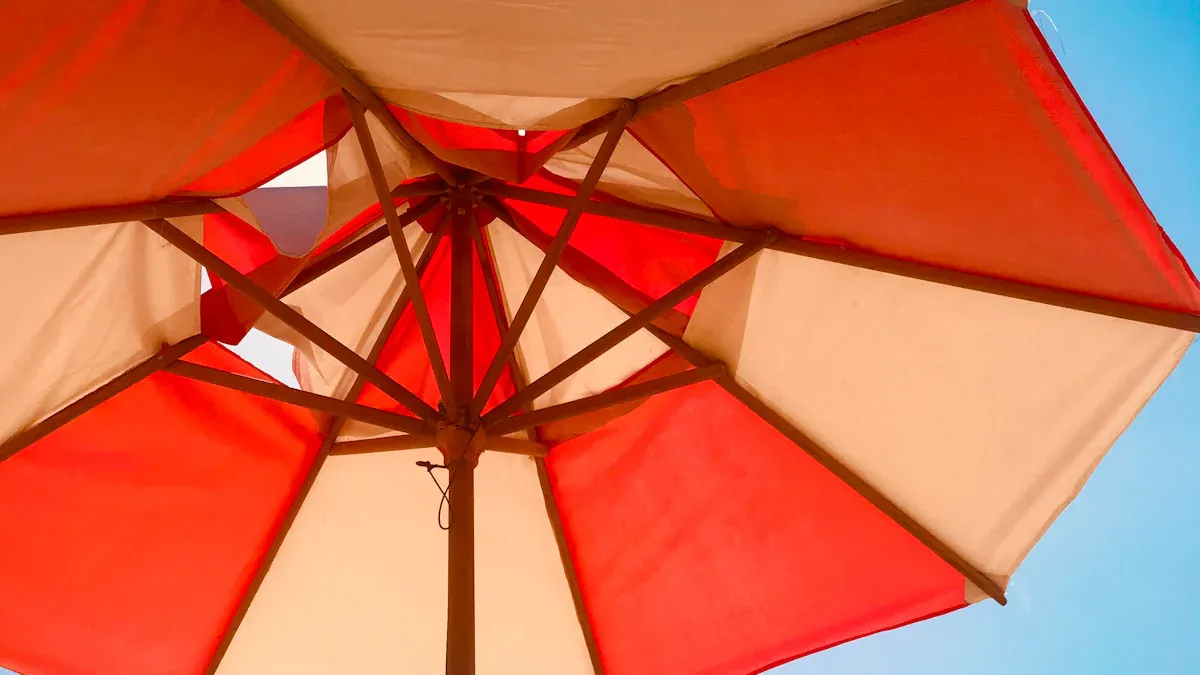
Children's umbrellas fall under toy safety rules because regulators classify them as children's products rather than simple rain gear. A child under 14 may use an umbrella as a toy, a walking stick, or even a sword. This dual purpose triggers strict oversight. The U.S. Consumer Product Safety Commission (CPSC) treats children's umbrellas as toys under the Consumer Product Safety Improvement Act (CPSIA). Europe applies the Toy Safety Directive alongside EN71 standards. Both frameworks demand rigorous testing for physical hazards and chemical exposure.
The classification hinges on intended use. A compact folding umbrella with cartoon prints targets young users, so regulators assume play behavior. Small parts like rivets, end caps, or decorative buttons can detach during rough handling. These components pose choking risks for children under three. The CPSC enforces small parts testing through ASTM F963, which includes sharp point tests and small parts cylinders. Europe's EN 13830:2018 goes further, specifying sharp edge tests, opening and closing fatigue tests up to 1000 cycles, rib tensile strength, and handle pull-out resistance. These safety standards for children's umbrellas exist because a broken rib or loose handle can cause eye pokes or finger injuries.
The U.S. and EU take different approaches to chemical safety. CPSIA sets a lead cap of 90 ppm for painted metal or plastic parts under 16 CFR 1303. It also restricts phthalates to 0.1 percent. California Proposition 65 adds mandatory warning labels for products containing listed carcinogens or reproductive toxins. Europe relies on REACH, which restricts hundreds of substances of very high concern, including formaldehyde and heavy metals. EN71-3 sets migration limits for heavy metals in toy materials and surface coatings. The table below summarizes the key safety regulations.
|
Region |
Standard |
Key Requirement |
|
United States |
CPSIA |
Lead and phthalate limits; tracking labels |
|
United States |
16 CFR 1303 |
Lead cap of ≤90 ppm for painted parts |
|
United States |
ASTM F963 |
Sharp point and small parts testing |
|
Europe |
REACH |
Restricts SVHCs in all materials |
|
Europe |
EN 71-3 |
Heavy metal migration limits |
|
Europe |
EN 13830:2018 |
Sharp edges, fatigue, rib strength, handle pull-out |
For manufacturers like DYY LIMITED, a custom children umbrella manufacturer exporting worldwide, compliance is non-negotiable. Wholesale kids umbrellas regulations demand documented test reports and declarations of conformity. Without these, customs seizures and product recalls become real risks. Understanding childrens umbrella safety standards protects both children and brand reputation.
The Consumer Product Safety Improvement Act, commonly called CPSIA, stands as the cornerstone of American children's product safety. Congress enacted this law in 2008 following a wave of recalls involving lead-contaminated toys. The legislation transformed how manufacturers approach safety standards for children's umbrellas and similar products. Before CPSIA, no federal mandate required third-party testing for children's merchandise. Today, the law demands rigorous verification for every batch entering the U.S. market.
Lead remains the most notorious hazard in children's products. Under CPSIA Section 101, total lead content in accessible substrate materials must not exceed 100 ppm. Surface coatings face an even stricter threshold: 90 ppm under 16 C.F.R. part 1303. These limits apply to every painted component on a children's umbrella, including the canopy graphics, handle decorations, and metal shaft finishes. A custom children umbrella manufacturer must verify each material batch before production begins.
Phthalate restrictions add another layer of chemical safety. The CPSIA permanently prohibits DEHP, DBP, and BBP at concentrations exceeding 0.1 percent. A 2018 CPSC final rule extended this prohibition to five additional phthalates: DINP, DIBP, DPENP, DHEXP, and DCHP. Together, these eight phthalates face a maximum concentration of 0.1 percent (1000 ppm) in children's toys and child care articles. Phthalates soften plastics, making them flexible, but they also disrupt endocrine function. For children's umbrellas, the plastic handle and any PVC components require careful material selection to meet these requirements.
Rachel Weintraub, legislative director at Consumer Federation of America, stated: "The CPSIA represents the most comprehensive strengthening of product safety laws in a generation. The CPSIA gave new vigor to the U.S. Consumer Product Safety Commission. The agency now reflects consumer perception of what our nation's product safety net should be. Consumers are safer as a result of the CPSIA and its effective implementation."
Compliance demands more than using safe materials. The CPSIA requires documented proof through testing and certification. Manufacturers must follow a structured process:
Determine whether the product qualifies as a children's product.
Identify all applicable safety rules under CPSIA and ASTM F963.
Determine required testing based on product type, materials, and age group.
Engage a CPSC-accepted laboratory for third-party testing.
Review test results to confirm passing status.
Prepare the Children's Product Certificate (CPC) with all required elements.
Maintain the certificate and supporting records for the mandated period.
The CPC must be issued by the U.S. importer or domestic manufacturer. Foreign companies cannot issue a valid certificate. This document includes seven specific elements: product identification, citation to each applicable safety rule, importer name and address, records custodian contact information, manufacture date and location, testing date and location, and identification of the CPSC-accepted laboratory.
ASTM F963 complements CPSIA by addressing mechanical hazards. This standard covers sharp edges, small parts testing, and pinch points. For children's umbrellas, small parts testing ensures that rivets, end caps, and decorative elements cannot detach and become choking hazards. The CPSC enforces these standards through market surveillance and the SaferProducts.gov public database, where consumers can report incidents.
For brands like a custom children umbrella manufacturer exporting worldwide, understanding wholesale kids umbrellas regulations prevents costly customs delays. Non-toxic materials, verified through third-party testing, protect both children and brand reputation. The safety standards for children demand nothing less than full compliance with every CPSIA requirement.

The European Union applies EN71 and REACH as its twin pillars for children's product safety. EN71 governs toys for children under 14 years old. REACH regulates chemical substances across all consumer goods. Together, these frameworks establish rigorous safety standards for children's umbrellas sold in EU markets.
EN71-1 specifies mechanical and physical safety requirements. The objective is straightforward: reduce injury risks during normal use or reasonably foreseeable misuse. For children's umbrellas, this means evaluating pinch points, sharp edges, and structural integrity. Testing laboratories conduct assessments per EN71-1. Sharp edge detection is performed at multiple stages: as received, after torque testing, and after tension testing. Sharp point detection is performed under identical conditions. These tests ensure that a child gripping, twisting, or pulling an umbrella cannot encounter dangerous protrusions.
Small parts testing forms another critical component. Children under three years old explore objects by mouthing them. Any detachable component—a rivet, end cap, or decorative button—must withstand reasonable force without separating. EN71-1 requires that small parts testing confirm components remain securely attached throughout the product's lifecycle. For a custom children umbrella manufacturer, this means selecting fasteners and joints that survive repeated opening, closing, and rough handling.
EN71-2 addresses flammability. Materials must resist ignition and slow flame spread. While umbrellas rarely contact open flames, the standard applies to all toy materials, including canopy fabrics and decorative elements.
EN71-3 focuses on chemical safety through migration limits. The standard restricts how much of certain toxic elements can transfer from accessible toy materials into a child's mouth. This simulation mimics a child chewing on a handle or canopy edge. Heavy metals including lead, cadmium, and arsenic face strict migration ceilings. For children's umbrellas, painted surfaces and plastic components require careful formulation to meet these limits.
REACH operates at a broader level. This regulation covers all chemical substances across industries, addressing human health and environmental concerns thro
ghout the supply chain. REACH Annex XVII lists restricted chemicals, including phthalates and lead, that cannot exceed specified concentrations in consumer products. The regulation also identifies Substances of Very High Concern (SVHCs) requiring authorization or restriction.
|
Aspect |
EN 71-3 |
REACH |
|
Scope & focus |
Harmonised standard under the Toy Safety Directive, focusing on bioavailability of toxic elements in toys |
Broader regulation covering all chemical substances across industries |
|
Substance coverage |
Specific toxic elements and chemical substances in toys |
Wider range including SVHCs in all articles and materials |
|
Compliance proof |
Presumption of conformity with Toy Safety Directive |
Registration, notification, supply chain communication, restrictions |
For wholesale kids umbrellas regulations, both frameworks demand documented evidence. Manufacturers must maintain technical files with test reports and declarations of conformity. Non-toxic materials verified through accredited laboratories protect children and ensure smooth customs clearance. Non-toxic materials also reduce liability risks for importers and distributors.
Compliance with EN71 and REACH requirements is essential for EU market entry. Brands like custom children umbrella manufacturers exporting worldwide prioritize these standards in every production batch. The safety standards for children's umbrellas demand vigilance at every stage—from raw material sourcing to final assembly. Testing costs are minimal compared to recall expenses or reputational damage. For parents, choosing umbrellas bearing CE marks and EN71 certification provides confidence in product safety. For manufacturers, meeting these regulations demonstrates commitment to child welfare and quality excellence.
Compliance with childrens umbrella safety standards requires deliberate action at every production stage. Manufacturers and importers must move beyond paperwork and embed safety into product design, material selection, and quality control. The steps below outline a practical roadmap for meeting wholesale kids umbrellas regulations while protecting young users.
Physical design determines whether a children's umbrella prevents injuries or creates them. A pinch-proof runner mechanism allows small hands to open and close the umbrella without catching fingers. This feature eliminates a common source of injury during independent use. Rounded plastic tips on the canopy ribs prevent eye pokes and facial scratches when children run or fall. Soft silicone caps on rib ends add another layer of protection. Reflective strips sewn into the canopy fabric improve visibility during rainy or foggy conditions, reducing traffic-related risks.
|
Safety Feature |
How It Enhances Safety |
|
Rounded canopy tips & rib ends (soft silicone caps) |
Prevents facial or eye injuries during falls or running |
|
Anti-pinch design (recessed buttons) |
Prevents finger injuries from spring mechanisms |
|
Reflective strips / fluorescent patches |
Increases visibility in rain/fog, reducing traffic risks |
Windproof construction with flexible fiberglass ribs prevents sudden inversion during gusts. A clear bubble canopy offers full visibility while keeping a child dry. These design choices address the physical hazards that regulators examine during testing and certification. A custom children umbrella manufacturer must document each safety feature in the technical file to demonstrate compliance.
Rigorous testing and certification form the backbone of regulatory compliance. Third-party testing through CPSC-accepted laboratories verifies that materials meet cpsia lead limits and phthalate restrictions. European markets require en71 testing for mechanical safety and reach chemical screening. Every batch needs documented evidence that small parts remain securely attached, that lead concentrations stay below legal thresholds, and that no restricted substances appear in paints or plastics.
Supplier audits prevent problems before they reach production. Raw material suppliers must provide certificates of analysis for each component. Custom children umbrella manufacturers maintain certifications and conduct regular audits of their supply chains. This practice ensures that fabrics, paints, and plastic components consistently meet safety standards. Without these checks, a single contaminated batch could trigger recalls across multiple markets.
Proper documentation prevents customs seizures and product recalls. Importers must maintain a technical file containing test reports, declarations of conformity, and the Children's Product Certificate. The CPSC requires this documentation for U.S. market entry. European authorities expect similar records under reach and en71 frameworks. Missing paperwork delays shipments and damages brand reputation. For a custom children umbrella manufacturer exporting worldwide, organized documentation is non-negotiable. Compliance protects children, satisfies regulatory requirements, and keeps supply chains moving efficiently.
CPSIA, EN71, and REACH collectively shield children from chemical exposure and physical hazards like small parts. These safety standards for children's umbrellas demand rigorous testing, non-toxic materials, and documented compliance. For manufacturers of custom children's umbrellas, meeting wholesale kids umbrellas regulations prevents recalls and builds consumer trust. Compliance transcends legal obligation—it represents moral responsibility toward every child who opens an umbrella. Parents should verify certifications before purchase. Brands must prioritize safety standards for children in every production decision. These regulations serve as quality roadmaps, not bureaucratic hurdles. Recalls damage reputations irreparably; prevention costs far less. Whether you're a parent or a brand, make safety the first priority—because every child deserves protection.
What are the most common safety hazards in children's umbrellas?
Small parts like rivets and end caps pose choking risks. Lead in paints threatens children's health. Phthalates in plastic handles also require careful attention. These hazards demand rigorous safety checks.
How do CPSIA and EN71 differ in their approach to safety?
CPSIA, part of the Consumer Product Safety Improvement Act, sets lead limits and certification requirements. EN71 covers mechanical safety including small parts testing. Both establish rigorous safety standards.
What does small parts testing involve for children's umbrellas?
A cylinder simulates a child's throat. Components must not fit entirely inside. This prevents choking hazards. The CPSC enforces this requirement for all children's products.
Why choose a custom children umbrella manufacturer for compliance?
Experienced manufacturers ensure compliance with childrens umbrella safety standards and wholesale kids umbrellas regulations. They test for small parts, lead, and phthalates. This protects brands from recalls.
How can buyers verify safety standards compliance?
Request test reports. Verify EN71 and REACH compliance. Check for CPSC-accredited lab testing. Confirm that lead limits and small parts requirements are met.


Endereço : Huli High-tech Park, Huli District, Xiamen, Fujian, China
Continue lendo, mantenha-se informado, inscreva-se e convidamos você a nos dizer o que pensa.
Direitos autorais © Susinoumbrella.com - DYY LIMITED Todos os direitos reservados.
Mapa do site
| Blogue
| Xml
| política de Privacidade
 Rede suportada